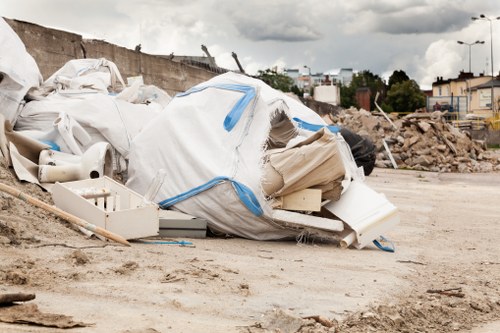
House Clearance Crystal Palace: Recycling and Sustainability
Welcome to our overview of how House Clearance Crystal Palace is evolving into an eco-friendly waste disposal area and a model for a more sustainable rubbish area across south London. This page explains our measurable recycling goals, how we work with local boroughs' waste separation schemes, and the practical steps we take to reduce landfill through re-use, repair and responsible disposal.Our core ambition is to be the leading crystal palace house clearance provider that minimises environmental impact while serving local households. We set a formal recycling percentage target of 75% diversion of recovery-able materials from landfill or incineration for each clearance job, emphasising re-use, resale and material-specific recycling streams.
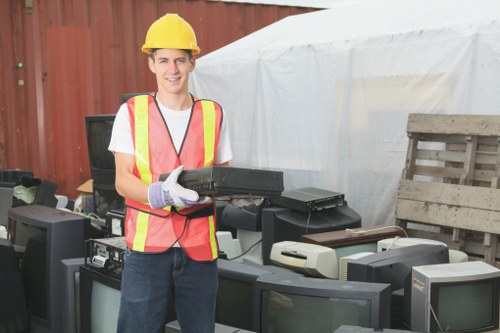 We coordinate with the four overlapping boroughs that serve the Crystal Palace area — Bromley, Croydon, Lambeth and Southwark — to follow their approach to waste separation and collection. Key local transfer stations and civic amenity points we regularly use include:
- Local borough transfer stations and household waste recycling centres
- Designated drop-off points for segregated construction and bulky waste
- Glass, paper, card and food waste streams in borough-operated facilities
Recycling targets, tracking and transparency
Every clearance is logged so we can track material outcomes. We aim to report monthly recycling rates and continually improve our processes to achieve and then exceed the 75% recycling and recovery target. Transparency in material flows is central to our environmental policy: audit trails record what is re-used, donated, recycled or responsibly disposed.Partnerships with charities and social enterprises are a cornerstone of our sustainable model. We divert functional furniture, appliances and clothing to local charities and community projects that provide valuable items to those in need. These collaborations help keep goods in use longer and reduce the demand for new products.
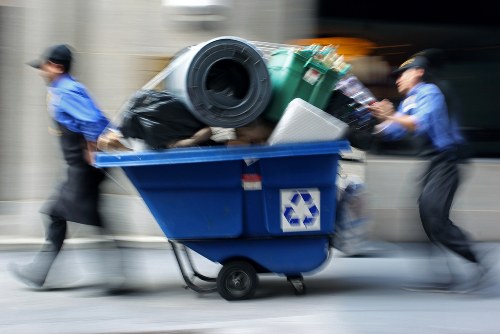 As part of our fleet strategy, we operate low-carbon vans — electric and hybrid vehicles where routes and charge infrastructure allow — to lower urban emissions during collections. Our logistics planning reduces unnecessary mileage and idling in residential streets, supporting a quieter, cleaner neighbourhood environment.
Local transfer stations and material separation
We prioritise using authorised transfer stations and recycling centres in the capital that specialise in sorting and processing household clearance streams. Materials are segregated into defined categories at source or at the transfer station to ensure the highest recovery rates:Common separation streams we follow:
- Metal (ferrous and non-ferrous) for scrap recycling
- Wood and timber for reclamation or energy recovery where appropriate
- Electricals and WEEE diverted to certified processors
- Textiles and soft furnishings sent to reuse or recycling partners
- Inert rubble and builders' waste taken to appropriate transfer facilities
Our operations mirror borough guidance on kerbside separation: glass, paper, card and some plastics are managed via local schemes while food waste and garden waste are routed to composting where available. Using local frameworks helps increase recovery rates and reduces cross-borough contamination.
Charity partnerships and resource re-use
We maintain active relationships with several London charities, repair cafés and social enterprises that accept functional household items. Donated items are inspected, cleaned and, if needed, repaired. This circular approach saves resources and supports community needs.Examples of reuse pathways include:
- Working furniture transferred to community centres
- Working appliances maintained by refurbishment partners
- Books and media given to local libraries and education projects
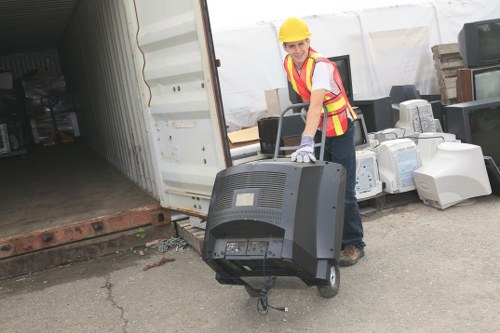 We also support textile reprocessing and electronics refurbishment initiatives. By integrating these programmes into our clearance workflow we significantly reduce materials destined for landfill and help create local social value.

Monitoring progress and future commitments
Our commitment to the environment goes beyond immediate reuse and recycling: we continually review our performance against our 75% recycling target and set incremental goals to increase diversion rates year-on-year. Reporting includes quantities by material type, destination (re-use, recycle, energy recovery) and transport carbon estimates.We collaborate with borough waste teams and authorised transfer stations to ensure compliance with local regulations and best practice for hazardous materials, such as asbestos-containing items, solvents and batteries, which are segregated and handled under strict protocols to protect people and the environment.
By promoting an eco-friendly waste disposal area ethos and building a resilient, sustainable rubbish area service in Crystal Palace, our house clearance operations aim to be part of the solution for a cleaner, greener London that values reuse, reduces emissions and supports local communities.